
IVF and IUI support is integrative care that works alongside your fertility clinic: it prepares your body before a treatment cycle and supports you during and after it, through nutrition, targeted supplements, stress regulation and a healthy microbiome. It does not replace your clinic’s protocol. It helps your body respond to it as well as possible.
If you have just booked your first appointment at a Dutch fertility clinic, or you are already cycling through IVF, IUI or donor insemination, there is one question the regular system rarely has time for: what can you do yourself, right now, to give this cycle the best possible chance? At Mesology Amsterdam this is exactly where I work. Not instead of your fertility clinic, but alongside it, grounded in recent peer-reviewed research.
Principales conclusiones
- IVF and IUI support works alongside your fertility clinic and never replaces your prescribed protocol.
- Research links stress reduction, a Mediterranean-style diet and antioxidants to better treatment outcomes.
- The best window to prepare is about 90 days before egg retrieval or insemination, for both partners.
- Support differs per phase: before the cycle, during stimulation, around transfer and after the cycle.
- Donor insemination, single women and same-sex couples benefit from the same preparation.
~ What recent research shows about IVF success and lifestyle
Recent studies show how strongly the body’s condition shapes the outcome of assisted reproduction.
Stress reduction
A 2025 randomised clinical trial added a mindfulness-based stress reduction programme and lifestyle coaching to standard IVF care. The clinical pregnancy rate rose to 39.3%, compared with 22% in the control group.
Nutrition
Women following a Mediterranean-style diet had better IVF results in several studies, and a 2025 review on lifestyle and female fertility linked healthy eating patterns to higher chances of pregnancy after IVF or ICSI.
Antioxidants for men
Reviews of antioxidant supplementation in subfertile men report higher pregnancy rates, although the certainty of this evidence is still low. Read more about Ayuda a la fertilidad femenina y Fertilidad masculina.
The microbiome
Research on the uterine microbiome suggests that women without a Lactobacillus-dominant microbiome may have lower pregnancy rates and a higher risk of early miscarriage.
Stress, inflammation, nutrient status, the microbiome and hormonal balance are not “soft” factors. They are measurable, many of them can be changed, and they show up in the results.
~ How IVF and IUI support works alongside your fertility clinic
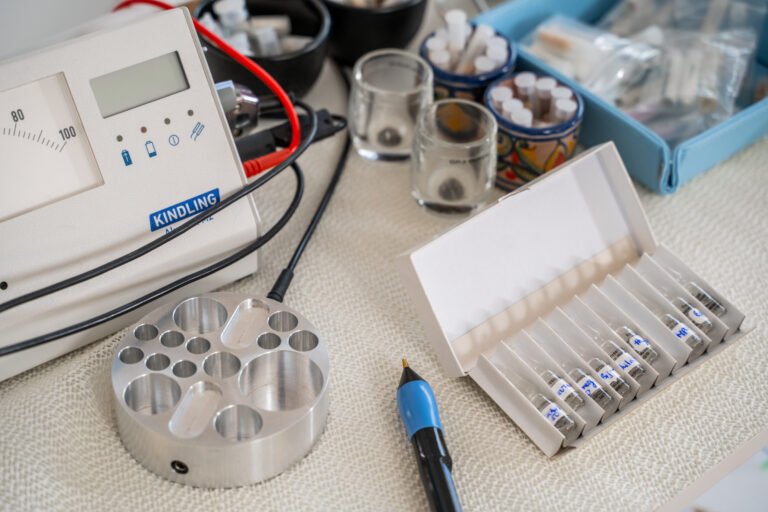
IVF and IUI support starts from respect for your clinic. A fertility clinic is excellent at what it does: stimulation, monitoring, egg retrieval, insemination and embryo transfer. What it usually cannot offer, because of caseload and protocols, is time for a deep look at your individual health. That is where mesology comes in.
In a 90-minute intake I combine your medical history, cycle data and semen analysis with two assessment methods that are rarely available elsewhere:
- Electro-Physiological Diagnostics (EPD): a measurement of the functional state of your hormonal and reproductive system, to see where your body is under strain.
- Pulse and tongue diagnosis from Traditional Chinese Medicine, which adds an integrated picture of your energy, constitution and resilience.
All your prescribed medication and protocols stay exactly as they are, and I am happy to coordinate with your gynaecologist when that is useful.
~ IVF and IUI support in every phase of your cycle
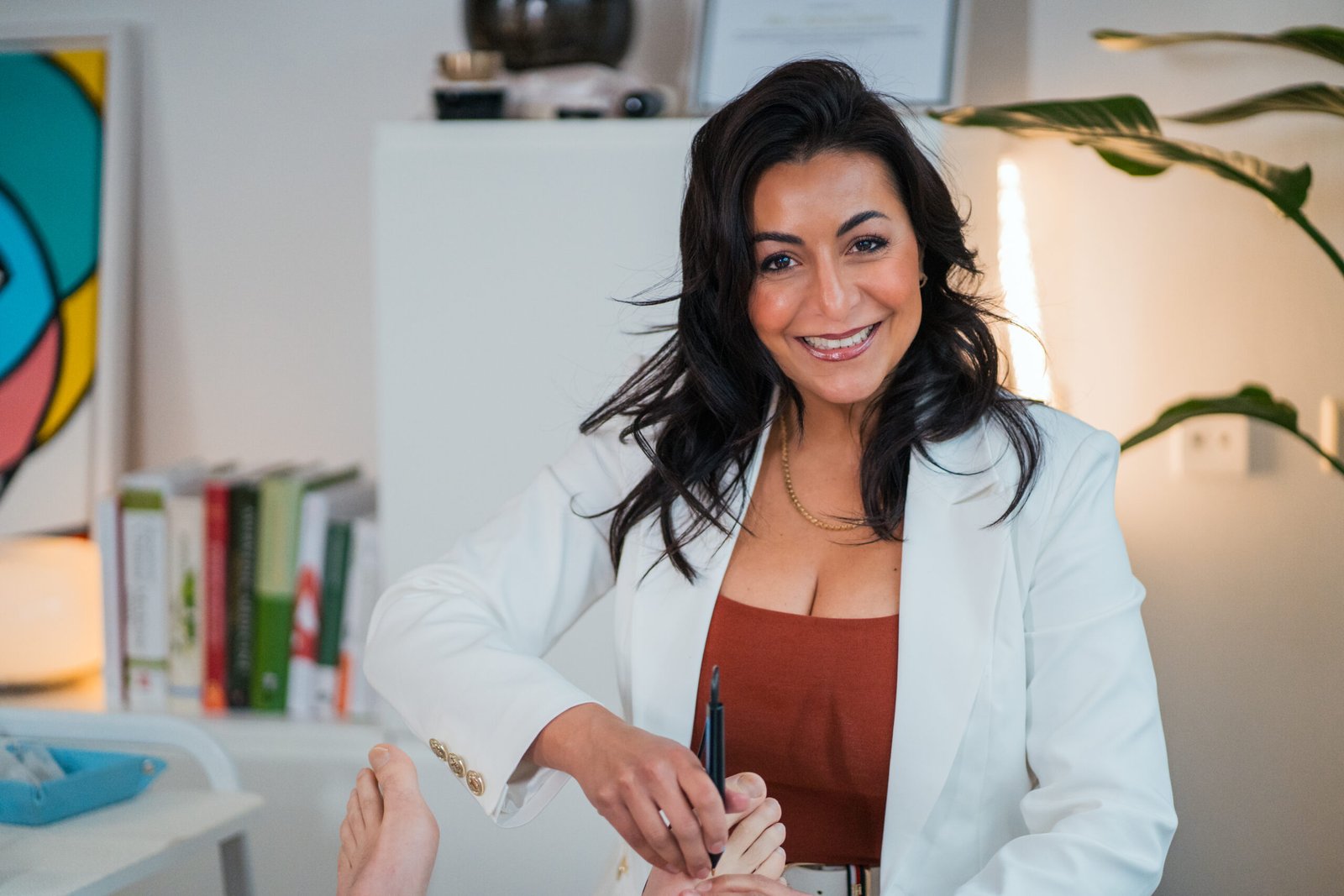
IVF and IUI support is different in every phase. Depending on where you are in your trajectory, I, Adriana Guarin, tailor the support.
Before the cycle: the 90-day window
Egg and sperm cells develop over roughly three months. In this phase we work on their quality with an anti-inflammatory eating pattern, targeted nutrients such as omega-3, CoQ10, zinc, selenium, folate and vitamin D, and by reducing exposure to hormone-disrupting chemicals.
During stimulation
We focus on lowering stress hormones, gently supporting your liver, and protecting your sleep and day-night rhythm, so your body can respond well to the protocol.
Around transfer or insemination
We support the lining of the womb with anti-inflammatory nutrition and microbiome support, and calm the nervous system with breathing, mindfulness and body awareness.
After the cycle
Whatever the outcome, there is room for emotional recovery, a hormonal reset and, if needed, preparation for the next attempt.
~ Support for donor insemination, single women and same-sex couples
With donor insemination, IVF and IUI support shifts its focus to the health of the receiving partner: cycle regularity, the quality of the womb lining, the microbiome and stress physiology. These are exactly the factors most strongly linked to live births in recent research. Single women and same-sex couples are warmly welcome; the preparation is the same and just as important.
~ What you can do yourself, starting today
Not all IVF and IUI support needs a practitioner. Some steps help almost everyone who is preparing for IVF or IUI:
- Eat a Mediterranean-style diet with vegetables, legumes, whole grains, fish and olive oil.
- Take folic acid as advised, and check your vitamin D level.
- Stop smoking and cut out alcohol, for both partners.
- Protect your sleep: aim for a regular rhythm of seven to eight hours.
- Build in daily moments of rest, such as a walk, breathing exercises or meditation.
- Limit plastics in food storage and heating, and choose fragrance-free care products.
Even four to six weeks of preparation is clearly better than none.
~ Preparing the male partner for IVF and IUI
Good IVF and IUI support always includes the man. Sperm quality plays a role in about half of all couples with fertility problems, and sperm cells take around 74 days to develop. What you eat, drink and do now shows up in the sample on the day of treatment.
What helps sperm quality
- Antioxidant-rich food: vegetables, berries, nuts and fish.
- Zinc, selenium, folate and omega-3, where tests or diet show a shortage.
- No smoking, little or no alcohol, and a healthy weight.
- Avoiding heat around the testicles: hot baths, saunas and a laptop on your lap.
When ICSI is planned
With ICSI a single sperm cell is injected into the egg, but sperm quality still matters, for example for DNA integrity. Preparation is just as useful.
~ IVF and IUI in the Netherlands: what to expect
In the Netherlands, your GP usually refers you to a gynaecologist after a year of trying without success, or sooner if you are over 35 or there is a known cause. Depending on the findings, the next step is IUI, IVF or ICSI. Basic health insurance covers the first three IVF or ICSI attempts for women up to 43, and the costs count towards your own risk (eigen risico).
Waiting times between referral, tests and treatment are often a few months. That waiting time is a valuable window: it is exactly when IVF and IUI support can prepare your body for the first treatment cycle.
~ How to start IVF and IUI support in Amsterdam
You start with a 90-minute intake at my practice in Amsterdam, in English, Spanish or Dutch. No referral is needed. Bring your previous lab results, semen analyses and cycle data. You leave with a clear, written plan for the coming months. Follow-up consultations usually take place every few weeks around your treatment. See precios y reembolso.
Book your IVF and IUI support intake
Preparing for IVF, IUI or donor insemination, or already in a trajectory?
Book an intake at Mesology Amsterdam and get a personal plan that works alongside your fertility clinic.
Qué puedes esperar de una primera sesión
90 minutos, en mi consulta en Ámsterdam. Cartografío tu historia clínica, reviso tus pruebas y resultados anteriores y realizo una evaluación de pulso, lengua y EPD. Dejas con un plan claro y escrito, en inglés, español o holandés.
Frecuentemente ~
Preguntas frecuentes
Preguntas ~
Yes. Mesology is complementary: all your prescribed medication and protocols stay exactly as they are, and Adriana is happy to coordinate with your gynaecologist when useful.
Ideally about 90 days before egg retrieval or insemination. That is one full cycle of sperm development and roughly three menstrual cycles. Even four to six weeks of preparation is clearly better than none.
Yes, if possible. Sperm quality plays a role in about half of all couples with fertility problems, so preparing together gives the best chance.
Basic health insurance does not cover mesology, but many supplementary insurances partly reimburse the consultations. Check your policy, or see the overview on Zorgwijzer.
Absolutely. The preparation for donor insemination is the same and just as important.
Follow-up consultations can take place by video. The intake with the EPD measurement takes place at the practice in Amsterdam.
Referencias
- Hashemi-Bakhtiari N. et al. (2025). Lifestyle improvements and mindfulness-based stress reduction in women undergoing IVF: a randomised clinical trial.
- Cunningham A.C. et al. (2025). The role of lifestyle intervention in female fertility: a modifiable target. Nutrients, 17(12), 2031.
- Karayiannis D. et al. (2018). Adherence to the Mediterranean diet and IVF success rate. Human Reproduction, 33(3), 494–502.
- Gaskins A.J. & Chavarro J.E. (2018). Diet and fertility: a review. American Journal of Obstetrics and Gynecology, 218(4), 379–389.
- Salas-Huetos A. et al. (2024). Antioxidant therapy for infertile couples: a comprehensive review. Frontiers in Endocrinology, 15, 1503905.
- Komiya S. et al. (2024). Lifestyle and fertility-specific quality of life affect reproductive outcomes in couples undergoing IVF. Frontiers in Endocrinology, 15, 1346084.
- Sirota I. et al. (2025). From gut to gamete: how the microbiome influences fertility and assisted reproduction.
- Zorgwijzer: reembolso de la mesología por parte de las aseguradoras sanitarias holandesas